


The Retirement Readiness Checklist: What to Do Before You Walk Away From Work

The Retirement Readiness Checklist: What to Do Before You Walk Away From Work
Retirement is one of the biggest transitions you will ever make. After spending 30 or 40 years working, saving, investing, and building a life for yourself and your family, you finally reach the point where you can start thinking about what comes next.
But here’s the catch: Being financially ready to retire and being prepared for retirement are two different things.
You might have a healthy 401(k), a paid-off house, and a decent pension. On paper, everything might look great. But have you thought about when to claim Social Security? How much you can comfortably spend each year? What happens when your employer-sponsored health insurance ends? Or how your taxes might change once you stop working?
These details matter. A retirement plan isn’t just about accumulating enough money to leave your job. It’s about creating a strategy that helps you turn the money you’ve saved into the life you want to live.
Before you turn in your retirement notice, here is a checklist worth working through.
1. Get a Clear Picture of Your Financial Life
Before making any major decisions, take inventory of where you stand today.
It sounds simple, but many people approaching retirement don’t have a complete picture of their financial situation. They know roughly how much is in their 401(k), but they haven’t added up their other investment accounts, bank accounts, real estate, pensions, debts, and expected retirement income.
Start by documenting the basics:
List all your investment accounts, including 401(k)s, IRAs, Roth IRAs, and taxable brokerage accounts.
Calculate your total savings, cash reserves, and other assets.
Identify outstanding debts, including mortgages, car loans, and credit cards.
Estimate your expected pension income, if applicable.
Review your estimated Social Security benefits.
Calculate your current monthly expenses.
Identify any major upcoming expenses, such as home renovations, vehicle purchases, or helping children and grandchildren.
The goal is to establish a baseline.
You can’t build a reliable retirement plan without understanding what you have, what you owe, and what income you can reasonably expect.
2. Figure Out How Much Money You’ll Actually Need
One of the biggest retirement planning mistakes is assuming your expenses will automatically decline when you stop working.
Some expenses may disappear. You might no longer need to commute, pay for work-related expenses, or contribute to your retirement accounts.
But other expenses could increase.
You may want to travel more, spend more time on hobbies, renovate your home, or visit family across the country. Healthcare costs could also become a larger part of your budget as you get older.
Instead of relying on a generic rule of thumb, build a retirement budget around the life you want to live.
Ask yourself:
What are my essential monthly expenses?
How much do I want to spend on travel, entertainment, and hobbies?
Do I plan to help children or grandchildren financially?
Will I maintain a second home, RV, boat, or vacation property?
Do I expect to pay off my mortgage before retiring?
What major purchases might I make during the first five years of retirement?
How much flexibility do I have to reduce spending if the economy or financial markets struggle?
It can also help to create two budgets: one for essential expenses and another for discretionary spending.
This gives you a clearer understanding of how much income you need to cover the basics and how much you want to fund the extras.
Retirement isn’t about figuring out how little you can spend. It’s about figuring out how to spend confidently on the things that matter most to you.
3. Create a Strategy for Your Retirement Income
During your working years, the process is relatively straightforward. You earn a paycheck, pay your bills, and contribute money to your retirement accounts.
Once you retire, the process changes. You must determine where your income will come from and how to coordinate those sources.
Your retirement income might include:
Social Security benefits.
Pension payments.
Withdrawals from traditional IRAs and 401(k)s.
Tax-free withdrawals from Roth accounts, when eligible.
Income from taxable investment accounts.
Rental income or other business income.
Part-time work or consulting.
The important part isn’t simply identifying these sources. It’s determining how they fit together.
For example, should you withdraw money from your traditional IRA first, or use taxable investments to cover expenses while allowing tax-deferred assets to continue growing? Would a Roth conversion before Social Security or required minimum distributions begin improve your long-term tax situation?
The right answer depends on your circumstances, but these decisions can have consequences that extend well beyond your first year of retirement.
Your checklist:
Identify every expected source of retirement income.
Determine when each income source will begin.
Calculate how much you may need to withdraw from your portfolio annually.
Establish a plan for funding your monthly expenses.
Review how your withdrawal strategy could affect your taxes.
Develop a strategy for years when the stock market declines.
A retirement income plan should help you understand not just whether you have enough money, but how to use it efficiently.
4. Make an Informed Decision About Social Security
Social Security is one of the most important decisions you’ll make as you approach retirement.
For eligible retirees, benefits can generally begin as early as age 62. However, claiming before your full retirement age permanently reduces your monthly retirement benefit. Waiting beyond full retirement age can increase your benefit until age 70.
That doesn’t automatically mean everyone should wait until 70.
If you need income sooner, have health concerns, expect a shorter retirement, or have other financial considerations, claiming earlier could make sense. For married couples, coordinating benefits and considering survivor benefits can add another layer to the decision.
The key is to evaluate Social Security in the context of your entire financial plan rather than making the decision in isolation.
Before claiming, ask:
What is my estimated benefit at different claiming ages?
Can I comfortably delay benefits using other income sources?
How does my decision affect my spouse?
Have I considered survivor benefits?
How will Social Security interact with my other taxable income?
Have I reviewed my earnings record for accuracy?
You can review your estimated benefits through the Social Security Administration’s official website.
Remember, the goal isn’t necessarily to maximize one monthly payment. It’s to make a decision that supports your household’s long-term financial security.
5. Review Your Investment Portfolio Before Your Paycheck Stops
Your investment strategy during retirement may need to look different from the strategy you used while accumulating wealth.
When you’re working, you may have regular contributions going into your 401(k). If the stock market declines, those contributions can help you purchase investments at lower prices.
When you’re retired and withdrawing money from your portfolio, the situation changes.
If the market declines early in retirement and you must sell investments to cover your living expenses, you could reduce the amount of capital available to participate in a future recovery. This is commonly known as sequence-of-returns risk.
That doesn’t mean you should abandon stocks when you retire. Retirement can last 25, 30, or even 35 years, and your portfolio may still need long-term growth to help offset inflation.
Instead, consider whether your investment strategy appropriately balances growth, income needs, liquidity, and risk.
Your checklist:
Evaluate how much stock market risk you’re taking.
Determine whether your portfolio aligns with your actual retirement spending needs.
Maintain an appropriate cash reserve for near-term expenses.
Review your exposure to individual stocks, sectors, and other concentrated investments.
Consider how bonds and other investments fit into your overall strategy.
Establish guidelines for rebalancing your portfolio.
Develop a plan for funding withdrawals during a market downturn.
One important question to ask yourself is this: If the stock market fell significantly during your first year of retirement, would your financial plan still work?
You don’t need to eliminate every investment risk. You need to understand the risks you’re taking and determine whether you can live with the potential outcomes.
6. Plan for Healthcare and Medicare
Healthcare is one of the most commonly overlooked expenses in retirement.
If you’re retiring before age 65, you’ll generally need to determine how you’ll obtain health insurance until you become eligible for Medicare, unless you qualify through another route.
Once you approach age 65, you’ll need to evaluate Medicare enrollment and coverage options.
Medicare is not a single, all-inclusive insurance policy. You’ll need to understand the choices involving Original Medicare, Medicare Advantage, prescription drug coverage, and potentially supplemental coverage.
You should also consider costs that Medicare generally does not cover comprehensively, including most long-term custodial care.
Your checklist:
Determine when your employer-sponsored health insurance will end.
Evaluate health insurance options if you retire before age 65.
Understand your Medicare enrollment timeline.
Compare Medicare coverage options based on your healthcare needs.
Estimate premiums, deductibles, prescription costs, and other out-of-pocket expenses.
Review whether income-related Medicare premium adjustments could affect you.
Consider how long-term care needs could affect your retirement assets.
Pay particular attention to your income during the years surrounding Medicare enrollment. Certain income-related Medicare premiums are based on tax information from two years earlier, so decisions you make today may affect your premiums in the future.
Healthcare planning should be part of your retirement strategy well before your final day at work.
7. Build a Tax Plan Before You Retire
Here’s something many retirees discover too late: Your retirement income may be taxed differently depending on where it comes from and when you receive it.
Traditional IRA and 401(k) withdrawals are generally taxable as ordinary income. Qualified Roth IRA distributions are generally tax-free. Interest, dividends, capital gains, pensions, and Social Security can each receive different tax treatment.
The way you coordinate these income sources can make a meaningful difference in your after-tax retirement income.
For example, someone with substantial traditional retirement accounts might benefit from evaluating partial Roth conversions during lower-income years before required minimum distributions begin.
However, Roth conversions can also increase current taxable income and potentially affect Medicare premiums or the taxation of Social Security. They aren’t automatically beneficial for everyone.
Your checklist:
Review your expected taxable income for the first several years of retirement.
Evaluate whether Roth conversions could make sense.
Understand when required minimum distributions will apply to your accounts.
Review the tax treatment of Social Security and pension income.
Coordinate withdrawals from taxable, tax-deferred, and Roth accounts.
Consider the tax implications of selling appreciated investments.
Evaluate how charitable giving could fit into your tax strategy.
Review your state income tax situation if you plan to relocate.
The years immediately before and after retirement can create planning opportunities that may not be available later.
Don’t wait until tax season to start thinking about taxes. By then, many of the most important decisions may already be behind you.
8. Review Your Estate Plan and Beneficiaries
Retirement is also a good time to revisit what would happen to your assets if something happened to you or your spouse.
Estate planning isn’t just for wealthy families. It’s about making sure your wishes are documented and that the people you trust can carry them out.
Start by reviewing the following:
Update your will, if necessary.
Review your financial and healthcare powers of attorney.
Confirm that your healthcare directives reflect your wishes.
Review beneficiaries on retirement accounts and life insurance policies.
Evaluate how your assets would transfer to your spouse, children, or other beneficiaries.
Review any existing trusts and determine whether they still meet your needs.
Organize important financial and legal documents.
Make sure trusted family members know where to find essential information.
Beneficiary designations deserve special attention because they can determine who receives certain assets, often independently of instructions in a will.
If you have a complex family situation, substantial assets, a business, or specific legacy goals, consider working with an estate planning attorney to ensure your documents and beneficiary designations are coordinated.
A good estate plan can help protect your family from unnecessary confusion during an already difficult time.
9. Prepare for the Emotional Side of Retirement
This might be the most overlooked item on the entire checklist.
For decades, work has probably provided some combination of income, structure, relationships, challenges, and purpose.
Then one day, the alarm clock goes off, and you don’t have to get up for work anymore.
At first, that can sound wonderful. And it often is. But some retirees eventually discover that having more free time doesn’t automatically mean they’re happier.
You may miss the routine, the people, or the feeling that you’re working toward something.
Before you retire, think about what you want your days to look like.
Ask yourself:
What activities will give my days structure?
How will I stay physically active?
How will I maintain friendships and social connections?
What hobbies or interests have I put off pursuing?
Do I want to volunteer, mentor, travel, or start another venture?
What do I want my relationship with my spouse or family to look like?
What gives me a sense of purpose beyond my career?
You don’t need to have every hour planned. In fact, part of the appeal of retirement is having the freedom to be spontaneous.
But having a general vision for your next chapter can make the transition smoother.
The goal isn’t just to retire from something. It’s to retire to something.
10. Have a Plan for the First Five Years
The first few years of retirement can set the tone for the decades that follow.
This is when you’ll begin adjusting to a new spending pattern, figuring out how you want to use your time, and learning how your financial plan works in the real world.
It’s also a period when unexpected expenses or a market downturn can challenge your assumptions.
Before retiring, consider building a plan for the first five years that addresses both your finances and your lifestyle.
Your checklist:
Establish a realistic spending target for your first year.
Identify major expenses expected during the first five years.
Determine how much cash or other liquid assets you’ll maintain.
Establish a process for reviewing your portfolio and withdrawing funds.
Schedule regular reviews of your financial plan.
Decide how you’ll adjust spending if circumstances change.
Revisit your goals as your retirement lifestyle takes shape.
A financial plan shouldn’t be a document you create once and put in a drawer. It should evolve as your life, priorities, and circumstances change.
11. Consider Whether You’re Truly Ready to Leave Your Paycheck Behind
Finally, step back and evaluate the big picture.
You may have enough money to retire at 62, but would working another year or two give you greater flexibility? Could part-time work provide income while allowing you to enjoy more freedom? Would retiring earlier require you to make sacrifices that aren’t worth it?
These are personal decisions, and there isn’t one right answer.
The point is to understand your options before making an irreversible decision.
Before giving notice, ask yourself:
Have I tested my retirement plan against different market conditions?
Can I afford my desired lifestyle without relying on unrealistic investment returns?
Have I considered inflation and a potentially long retirement?
Do I understand the financial trade-offs of retiring now versus working longer?
Does my plan account for unexpected expenses and changes in health?
Have I discussed my expectations with my spouse or family?
Am I retiring because I’m financially ready, because I’m emotionally ready, or both?
If you can answer these questions confidently, you’ll be in a much stronger position to make an informed decision.
You’ve probably spent decades working hard, saving money, and making sacrifices to reach retirement.
You deserve to enjoy it.
But the transition from earning a paycheck to living off the wealth you’ve accumulated requires a different kind of planning. Your investment strategy, tax decisions, healthcare costs, estate plan, and retirement income all need to work together.
The good news is that you don’t have to figure everything out on your own.
A comprehensive financial plan can help identify potential problems before they arise, uncover opportunities you may have overlooked, and give you a clearer picture of what your money can support.
At Lloyd Financial Group, we believe retirement planning should be about more than watching your account balances. It’s about understanding your entire financial picture, coordinating the moving pieces, and helping you make decisions that align with the life you want to live.
Because the ultimate goal isn’t simply to accumulate enough money to stop working.
It’s to have the confidence to enjoy what comes next.
Dream Bigger. Sleep Better.
Click here to schedule a meeting — I’m here to help you take the next step toward financial freedom.
Colin Symons, CIO Lloyd Financial Group
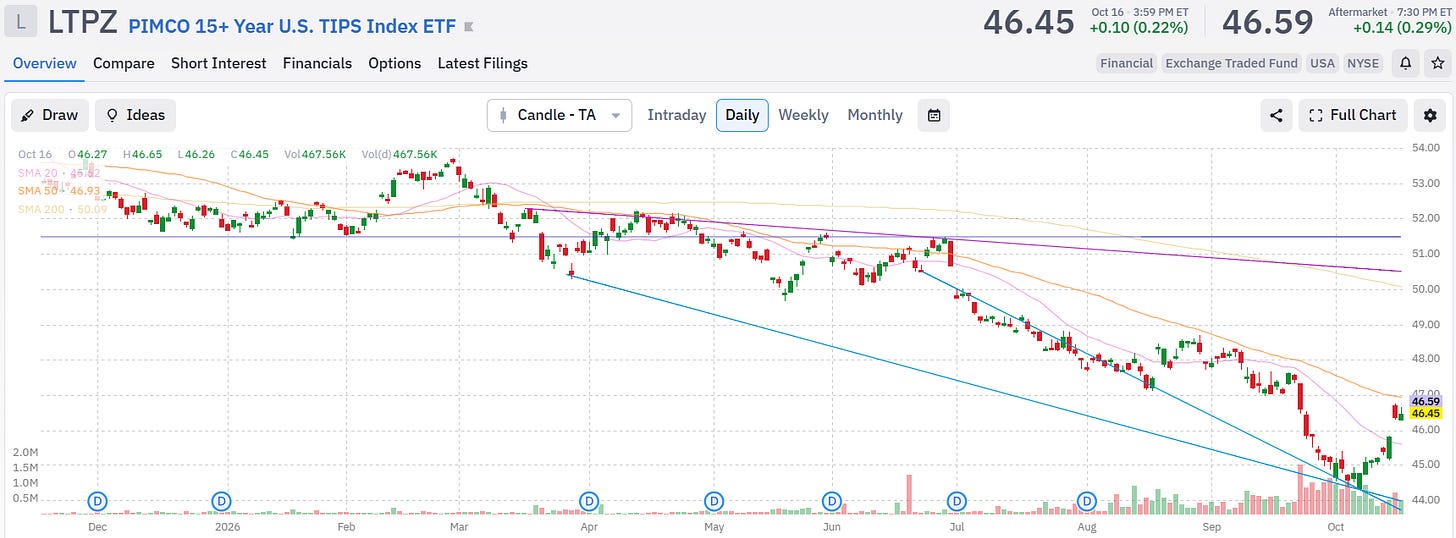
French 10Y bond yields continued to rise sharply on Monday, though they’ve relaxed a bit today as unrest eased.
Conversely, a 20Y Japanese bond drew record demand and seems to have helped put a bid back in the global bond market.
German PPI was 1.9% m/m vs. exp. 0.8%, the highest in over three years.
China’s GDP was 4.5% Y/Y vs. exp. 4.3%.
Chip stocks in Asia fell as AI-financing fears persisted, with the Kospi index -4%.
ADP Employment, Housing Starts, Building Permits, and Philly Fed Services today.
Bottom Line: We can’t seem to get bonds and tech satisfied at the same time.
Click here to schedule a meeting — I’m here to help you take the next step toward financial freedom.
Disclosures/Regulation:
This content is intended to provide general information about Lloyd Financial. It is not intended to offer or deliver investment advice in any way. Information regarding investment services are provided solely to gain an understanding of our investment philosophy, our strategies and to be able to contact us for further information.
All information has been obtained from sources believed to be reliable, but its accuracy is not guaranteed. There is no representation or warranty as to the current accuracy, reliability or completeness of, nor liability for, decisions based on such information and it should not be relied on as such.
The views expressed in this commentary are subject to change based on market and other conditions. These documents may contain certain statements that may be deemed forward‐looking statements. Please note that any such statements are not guarantees of any future performance and actual results or developments may differ materially from those projected. Any projections, market outlooks, or estimates are based upon certain assumptions and should not be construed as indicative of actual events that will occur.
Past performance is no guarantee of future returns.
Different types of investments involve varying degrees of risk. Therefore, it should not be assumed that future performance of any specific investment or investment strategy will be profitable
Want a clearer view of where you stand? Schedule a free portfolio analysis.
Comments