


Sitting on Cash? How Dollar-Cost Averaging Can Help You Get Back Into the Market

Sitting on Cash? How Dollar-Cost Averaging Can Help You Get Back Into the Market
One of the hardest decisions in investing isn’t always figuring out what to buy. Sometimes, it’s figuring out when to put your money to work.
Maybe you’ve recently sold a business, received an inheritance, accumulated cash in a savings account, or spent the last few years waiting for the perfect opportunity to invest. You know the stock market offers long-term growth potential, but with so much uncertainty in the economy and headlines constantly warning about the next correction, putting a large sum of money to work all at once can feel uncomfortable.
What if the market drops 10% the following week? What if a recession is right around the corner? What if you invest today and wish you had waited another month?
These are reasonable questions. Unfortunately, nobody has a crystal ball, and waiting for the perfect entry point can become a financial planning problem of its own.
That’s where dollar-cost averaging can help.
What Is Dollar-Cost Averaging?
Dollar-cost averaging is the process of investing a predetermined amount of money at regular intervals rather than investing the entire amount at once.
For example, let’s say you have $120,000 sitting in cash that you want to invest in a diversified portfolio. Instead of investing the entire amount today, you could invest $10,000 per month over the next 12 months.
If the market rises, some of your money is already invested and participating in those gains. If the market falls, your next $10,000 investment buys shares at lower prices.
The goal isn’t to predict where the market will go next. It’s to establish a disciplined process for putting money to work over time.
Dollar-cost averaging can be particularly helpful for investors who have been out of the market for a while and are struggling to overcome the fear of getting back in.
The Danger of Waiting for the Perfect Time
Here’s the challenge with sitting on cash: You have to make two decisions correctly.
First, you have to decide when to get back into the market. Second, you have to decide when to stop waiting and actually invest.
Imagine an investor who has been holding cash because they believe stocks are too expensive. The market rises 10%, and they decide to wait for a pullback. The market rises another 8%, and they become even more hesitant because prices are now higher than when they started waiting.
Eventually, they face a difficult choice: Buy at higher prices or continue waiting for a correction that may never arrive.
This is one reason investors can miss meaningful market gains. The fear of losing money today can lead to the risk of missing opportunities tomorrow.
Historically, stocks have rewarded patient, long-term investors, although returns are never guaranteed and losses can occur. Markets can also experience sharp declines, making the timing of an investment emotionally difficult.
The important lesson is that waiting for the perfect entry point is not a reliable investment strategy.
You don’t need to predict every market move to build a successful financial plan. You need a strategy that accounts for uncertainty and helps you make decisions you can stick with.
Does Dollar-Cost Averaging Actually Produce Better Returns?
Here’s where things get interesting.
Dollar-cost averaging can make investing feel more manageable, but it doesn’t automatically produce better returns than investing a lump sum immediately.
In fact, research has generally shown that investing a lump sum tends to outperform spreading the investment over time when markets rise over the investment period. That’s because the lump-sum investor has more money invested earlier, allowing more of the portfolio to participate in market gains.
However, markets don’t always rise.
If stocks decline shortly after you invest, spreading your purchases over time may reduce the impact of that initial decline on the money you haven’t invested yet.
Consider two investors who each have $120,000 available.
Investor A invests the entire $120,000 immediately.
Investor B invests $10,000 per month over 12 months.
If the market climbs steadily throughout the year, Investor A will generally benefit more because more of the money was invested earlier.
If the market falls significantly during the investment period and subsequently recovers, Investor B may benefit from purchasing shares at lower prices along the way.
Of course, the actual outcome depends on the path of market prices, the timing of each investment, the assets purchased, and any interest earned on uninvested cash.
Neither approach guarantees a better outcome.
The real benefit of dollar-cost averaging may be behavioral rather than mathematical. If investing gradually helps you overcome the fear of investing and follow through on a long-term plan, that discipline can be valuable.
A strategy you can consistently follow is often more useful than a theoretically optimal strategy you are too uncomfortable to implement.
Don’t Confuse Dollar-Cost Averaging With Market Timing
There’s an important distinction between investing new money gradually and repeatedly moving in and out of the market based on your predictions about what happens next.
Dollar-cost averaging works best when you establish a schedule and follow it.
For example, you might decide to invest 25% of your available cash immediately and the remaining 75% in equal monthly installments over the next six months.
Alternatively, you might invest a fixed amount every two weeks or every month until your target allocation is reached.
The specific schedule matters less than having a thoughtful plan that fits your financial circumstances.
What you want to avoid is changing the plan every time the market moves.
If stocks rise, don’t automatically accelerate your purchases because you fear missing out. If stocks fall, don’t abandon your schedule because you’re suddenly convinced the market is headed lower.
Those emotional reactions can turn a disciplined investment strategy into an endless exercise in trying to predict the future.
Before investing, establish your timeline, target portfolio allocation, cash reserves, and tolerance for losses. Then determine a schedule that helps you move toward your goals.
And remember, dollar-cost averaging doesn’t eliminate risk. You can still lose money if the investments you purchase decline in value.
What About the Cash You’re Holding?
One consideration that often gets overlooked is the opportunity cost of keeping money on the sidelines.
Cash can serve an important purpose in a financial plan. It provides liquidity for emergencies, upcoming expenses, and near-term financial obligations. It can also offer stability when markets become volatile.
But cash intended for long-term investment has a different role.
When you hold money in cash for an extended period, you may miss market appreciation and risk losing purchasing power to inflation. Even when cash earns interest, its long-term growth potential may be lower than that of a diversified portfolio of stocks and bonds, depending on market conditions.
That doesn’t mean every dollar should be invested immediately.
If you need the money for a home purchase next year, have significant tax obligations coming due, or don’t have sufficient emergency savings, keeping those funds liquid may be appropriate.
But if you have excess cash intended to support retirement or other long-term goals, it is worth asking whether that money is sitting on the sidelines because you genuinely need the liquidity or because you’re waiting for the market to make you feel comfortable.
Those are two very different situations.
Build a Plan That Lets You Sleep at Night
At the end of the day, investing isn’t just about maximizing returns. It’s about aligning your money with your goals, your timeline, and your ability to tolerate risk.
For some investors, investing a lump sum immediately may be the most appropriate approach. For others, gradually deploying cash over several months may provide the confidence they need to move forward.
The right answer depends on the bigger financial picture.
How much cash do you need for emergencies? When will you need to withdraw money from your portfolio? What happens if the market declines 15% shortly after you begin investing? Does your investment allocation reflect your actual risk tolerance, or just the amount of risk you think you can handle when markets are calm?
These questions matter more than trying to guess whether stocks will be higher or lower next month.
At Lloyd Financial Group, we believe your investments should be connected to a comprehensive financial plan. That means looking beyond the portfolio to understand your retirement goals, taxes, cash flow, and the life you want your money to support.
The objective isn’t to eliminate every risk or perfectly time every investment. It’s to develop a thoughtful strategy that helps you navigate uncertainty without losing sight of the bigger picture.
If you’ve been sitting on cash, you don’t have to choose between investing everything today and waiting indefinitely for the next market correction.
Dollar-cost averaging offers another option: a structured way to gradually put new money to work while reducing the emotional pressure of choosing a single entry point.
It may not outperform investing a lump sum, particularly when markets rise. But it can help investors who are hesitant to get started overcome indecision and commit to a long-term investment strategy.
Remember, the goal isn’t to win every short-term market battle. It’s to put your money in a position to support your long-term financial goals.
Sometimes, the biggest investment mistake isn’t buying too early or buying too late. It’s spending so much time waiting for the perfect opportunity that you never put your plan into action.
Dream Bigger, Sleep Better.
Click here to schedule a meeting — I’m here to help you take the next step toward financial freedom.
Colin Symons, CIO Lloyd Financial Group
There are two basic problems, right now, inflation and AI fears.
Inflation is flaring today, with a somewhat hot CPI number. How much lasting effect does it have, though?
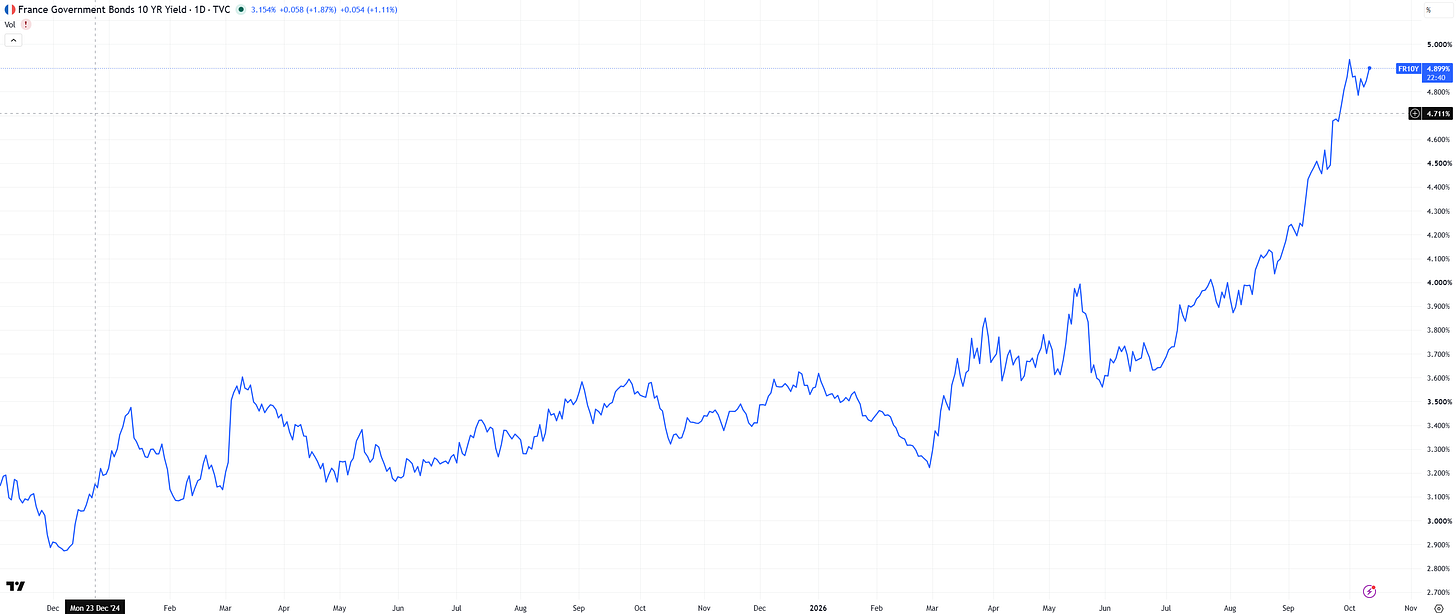
After spiking on the report, bonds settled and never breached old level. In isolation, CPI didn’t matter, much.
We are going to do it again, tomorrow, with PPI. Expectations are for an increase from 0.2% to 0.3% m/m for Core.
Until we see something that looks bad, like triple-digit oil, I find it hard to get too worried about inflation, and the market seems to largely agree.
Dollar strength is a bit of an issue.
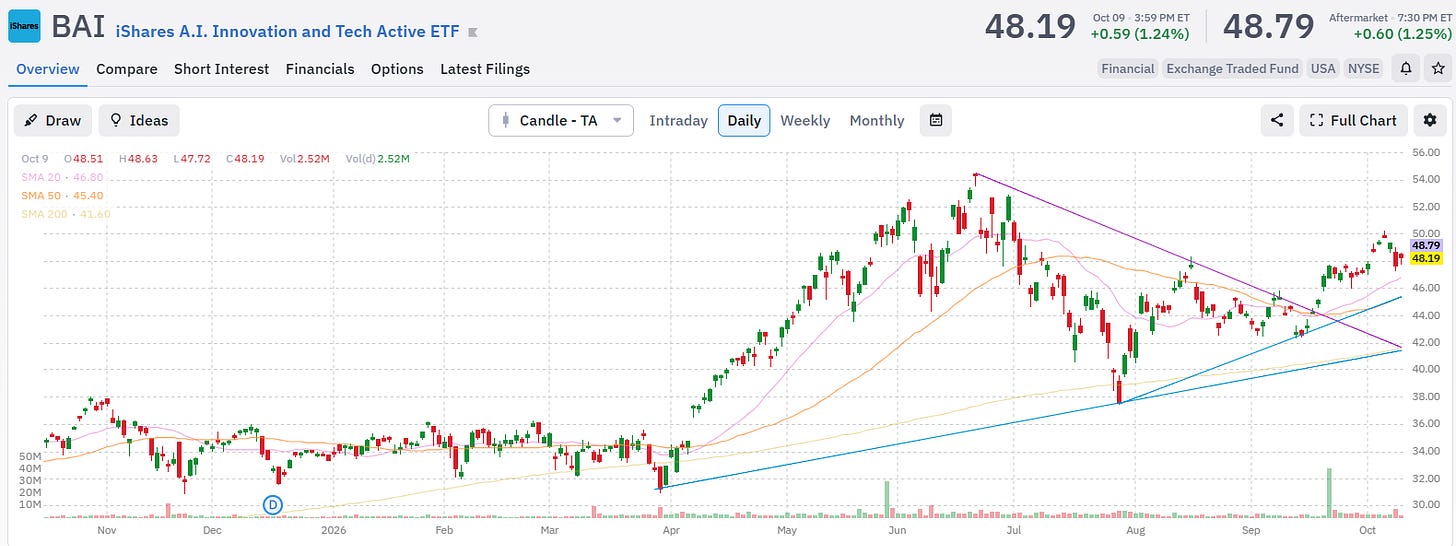
I find the AI worry somewhat odd, and I mostly view it as the endpoint of market de-risking rather than a problem within the space.
Chinese memory is a theoretical concern but most likely the US wouldn’t allow it to be used.
Some of the other stories, like OpenAI usage and commentary, are basically manufactured fear porn.
We’ve been trimming AI for a while, but earnings should still be good. At these prices, I look forward to earnings calls.
We have been broadening positions, of late, with our last buys being ISRG and NLY.
Still think there’s upside in AI, though.
We know what’s happened. More important to think about what can and will happen, particularly with earnings coming up.
CPI came in a bit hot, with expectations having been all over the place, even from good forecasters. Headline CPI was 0.6% m/m, as expected, but Core was 0.3% vs. exp. 0.2%. That gets Y/Y Core to 2.6% vs. prev. 2.5%, which is not the desired direction. Rent costs were a big driver but ultimately, fuel prices are also likely a broad culprit and PPI tomorrow will be even more important.
Interestingly, while stocks were hit pretty hard, long bonds got stronger through the day and actually ended higher. Arguably, that’s pricing in an AI slowdown.
The Fed’s Beige Book saw inflation pressures rise but growth moderate. The growth moderating part was modest but interesting. Something to watch.
The Fed’s Daly said there’s no need to raise rates in October.
Anthropic said revenue climbed 45% in the last quarter but didn’t disclose their ARR, which some found disappointing.
Neocloud stocks like CRWV, IREN, and NBIS fell as Gartner predicts 80% of neoclouds will cease operations by 2030 if breakneck AI infrastructure continues at this pace. I guess we all need something to worry about.
Chip stocks are continuing to fall this morning, as investor fears are leading to selling, from SK Hynix (SKHY) down another -6% to NVDA down -2%.
Taiwan Semi (TSM) is down -2% despite beating estimates and raising revenue guidance.
PPI can shift the panic today. We also have Jobless Claims, NY and Philly Manufacturing, and Retail Sales.
Bottom Line: Now even the Chinese chip stocks are falling as AI fears broaden despite rates falling.
Click here to schedule a meeting — I’m here to help you take the next step toward financial freedom.
Disclosures/Regulation:
This content is intended to provide general information about Lloyd Financial. It is not intended to offer or deliver investment advice in any way. Information regarding investment services are provided solely to gain an understanding of our investment philosophy, our strategies and to be able to contact us for further information.
All information has been obtained from sources believed to be reliable, but its accuracy is not guaranteed. There is no representation or warranty as to the current accuracy, reliability or completeness of, nor liability for, decisions based on such information and it should not be relied on as such.
The views expressed in this commentary are subject to change based on market and other conditions. These documents may contain certain statements that may be deemed forward‐looking statements. Please note that any such statements are not guarantees of any future performance and actual results or developments may differ materially from those projected. Any projections, market outlooks, or estimates are based upon certain assumptions and should not be construed as indicative of actual events that will occur.
Past performance is no guarantee of future returns.
Different types of investments involve varying degrees of risk. Therefore, it should not be assumed that future performance of any specific investment or investment strategy will be profitable
Want a clearer view of where you stand? Schedule a free portfolio analysis.
Comments